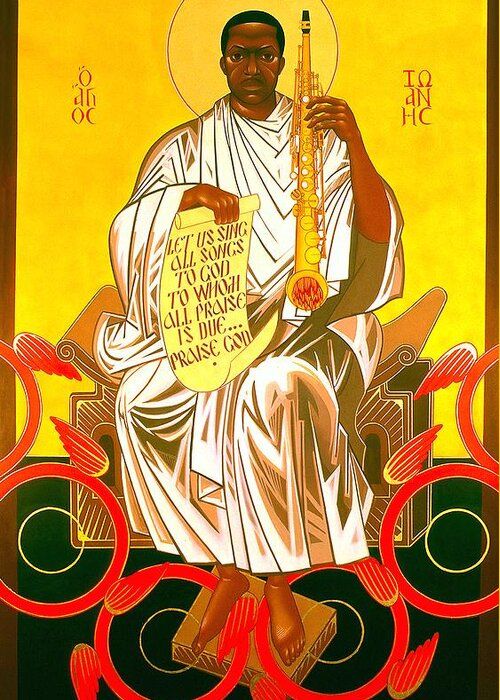
Will-I-Am - The Church of John Coltrane


"Coltrane Inspired Worship - Experience moments where music becomes prayer, worship, and a pathway to the Spirit."
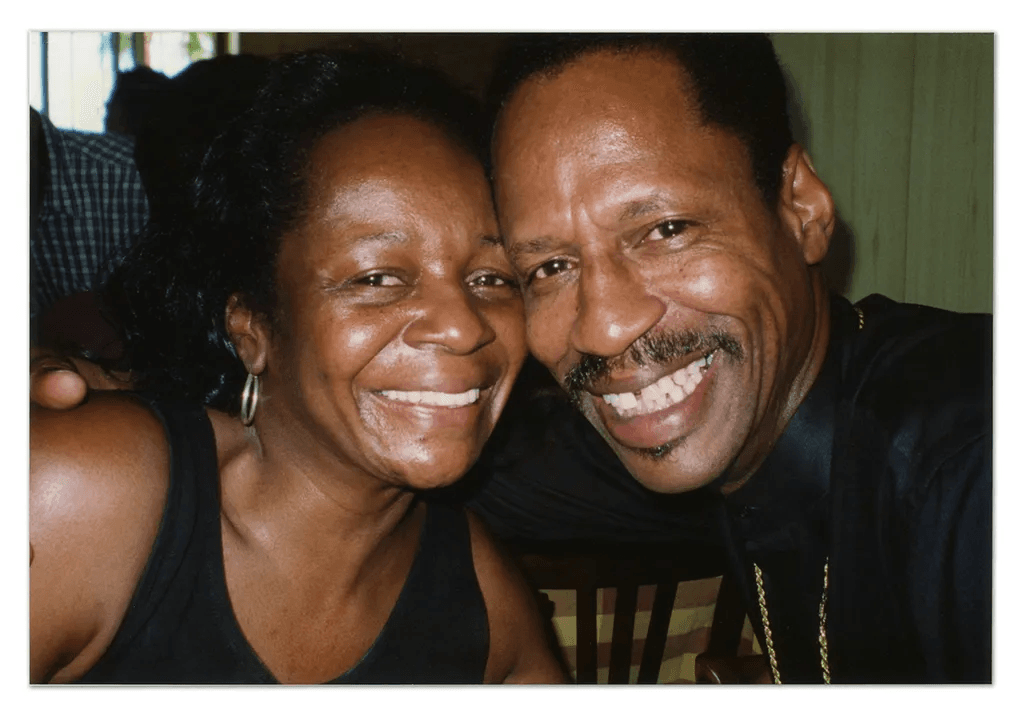
This quote from the Official Saint John Coltrane African Orthodox Church website perfectly summarises Marina and Franzo King's journey. Who are the Kings, you ask?
The Journey starts on September 18, 1965, when Franzo and Marina King attend a San Francisco jazz workshop led by the John Coltrane Quartet for their first wedding anniversary. Franzo came from a working-class Pentecostal background, while Marina came from an Episcopalian, middle-class family with a jazz lineage; their relationship was marked by perseverance despite family opposition and social challenges. The jazz workshop proved to be a pivotal moment in their lives; both reported having a spiritual experience in Coltrane's presence, stating they saw a vision of the Holy Ghost as Coltrane took the bandstand. This shared vision is often referred to as the Sound Baptism in the church.
After 1965 and inspired by the Sound Baptism, the Kings started gatherings devoted to listening to Coltrane's music, prayer and spiritual devotion. They called this the Jazz Club Listening Clinics; this marked the first evolutionary step of the Coltrane church. These meetings took place in the King's apartment in the Potrero Hill housing project in San Francisco.
Over time, participants in these listening clinics became aware of the decline of jazz music in the black community, with city redevelopment threatening the survival of black-owned clubs. In response, the Kings created the Yardbird Club in 1968. Named after Jazz musician Charlie Parker's nickname, the club was an after-hours venue where musicians could get paid fairly at the door and play what they wanted.
The Yardbird Club eventually became the Yardbird Temple, and in 1969 it transitioned into the Yardbird Vanguard Revolutionary Church of the Hour. Throughout this time, the church had a relationship with Huey P. Newton and the Black Panther Party, with a strong focus on Black liberation and activism.
The Vanguard Revolutionary Church became the One Mind Temple in 1971, later changing to the One Mind Temple Vanguard Revolutionary Church of the Hour, then to One Mind Temple Evolutionary Transitional Body of Christ in 1973. This evolutionary phase marked a shift toward deeper spiritual exploration, meditation, fasting, and prayer, and a growing appreciation for the spiritual aspect of John Coltrane's legacy. During this period, the group openly worshipped John Coltrane as a divine figure, integrating elements from Christianity, Hinduism, and other spiritual traditions.
The congregation's next major transition was its incorporation into Alice Coltrane's Vedantic Center. Under Alice Coltrane's guidance, the group adopted Hindu chanting, studied the Bhagavad Gita, and embraced spiritual universalism. The involvement of Alice Coltrane provided the church a living link to John Coltrane; the Kings and congregation would refer to Alice Coltrane as the mother of the royal family and spiritual consort of John Coltrane.
Things went sour, however, as Alice Coltrane later sued the church for the use of John Coltrane's name. The lawsuit brought much publicity to the church and drew the interest of the African Orthodox Church; in 1982, the Kings, seeking institutional legitimacy and ecumenical protection, joined the church. This move marked a shift from the deification of John Coltrane (as practised during the Vedantic Centre years) to his canonisation as a saint within the African Orthodox framework; moreover, the church adopted orthodox Christian worship while maintaining its unique Coltrane-centred liturgy and commitment to social justice. Starting out as the One Mind Temple Missionary Episcopate of the African Orthodox Church of the West, the church officially became recognised in 1986 as St. John Will-I-Am Coltrane African Orthodox Church. Consecrated as a bishop in 1984, Franzo King became an Archbishop in 2001; Marina King, often known as Mother Marina, is recognised as an equal partner in the church’s leadership.
As mentioned before, John Coltrane's spiritualism is recognised as paramount in the church. Members refer to Coltrane Consciousness (inspired by the Sound Baptism) as a set of social, cultural, and political practices derived from Coltrane's music and life. After experiencing a spiritual awakening in 1957, Coltrane described gaining a richer, fuller, and more productive life. He viewed himself as a spiritual universalist; he believed in God, respected all religions, and saw music as a way to uplift people and express faith.
Finally, the Kings and church hold John Coltrane's A Love Supreme as a spiritual formula and God-centred work, being the cornerstone of Coltrane Consciousness. The four-part suite "Acknowledgement," "Resolution," "Pursuance," and "Psalm" is interpreted as a spiritual guide for growth: recognising one's faults, resolving to change, pursuing the right path, and offering praise.
The King's Journey shows the transformative effects of music and how the musical and spiritual often intertwine.
Danny J